Buying
Land Transfer Tax in Toronto and Ontario, With Examples
Ontario and Toronto land transfer tax rates, first-time buyer refunds, and worked examples at $700K, $1M and $1.3M, with every step of the math shown.
Updated 6 min read
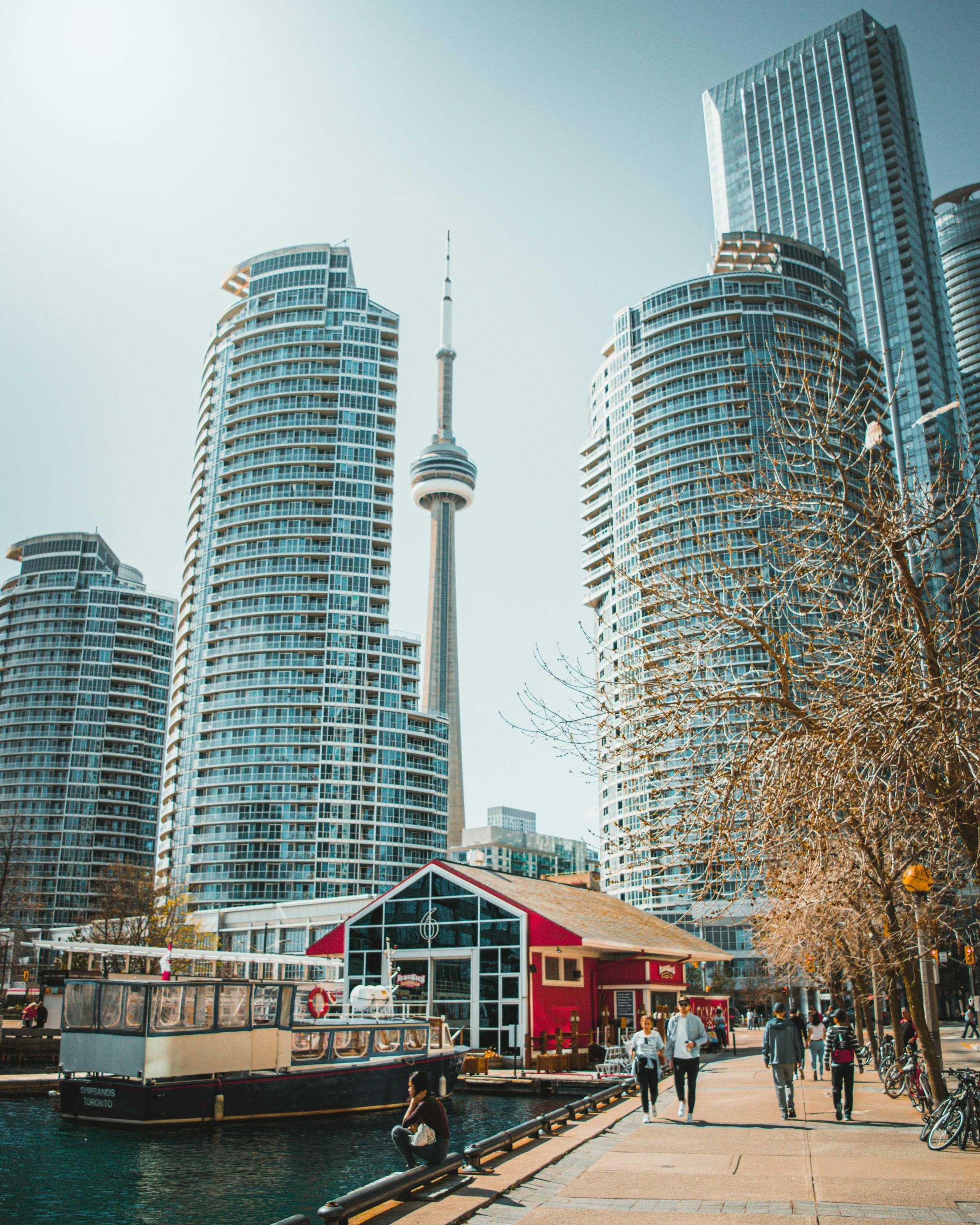
Downtown Toronto is the city centre inside Old Toronto, running from Bathurst Street to the Don Valley and from the lake up to Bloor Street, about 16.6 square kilometres in all.
Book a free Gameplan SessionSources: City of Toronto. Full citations at the foot of the page. Compiled November 2026.
TRREB sales for October 2026, and the 2021 Census housing mix.
What's your home worth?
Start with your address for a rough range on a Downtown Toronto home.
TRREB districts C01 and C08 cover the downtown core. C01, which runs west of Yonge Street, recorded 272 sales in October 2026 at an average of $815,185 and a median of $681,000. C08, east of Yonge, had 128 sales at an average of $706,827 and a median of $574,950. Condo apartments made up 331 of the 400 sales in the two districts, about 83%, at a combined average of $677,577. Supply was higher than the city overall: C01 had 4.9 months of inventory and C08 had 6.0, compared with 4.6 for the City of Toronto. The composite benchmark fell 7.38% year over year in C01 and 6.95% in C08.
Downtown is almost entirely apartment living. In Wards 10 and 13, 86.7% of occupied homes are in buildings of five or more storeys and another 7.6% are in smaller apartment buildings. Single-detached houses make up just 0.5% of the stock and semis 0.8%. Row houses make up 3.2%. Most households rent: owners account for 36.4%, the lowest share of any area in this guide. Households are small, averaging about 1.7 people in both wards. Ward 10 Spadina-Fort York grew by 18.4% in five years and Ward 13 Toronto Centre by 17.4%.
Stations, rapid transit and highways.
Boundaries change. Confirm your address with the board before you buy.
Parks, neighbourhoods and who Downtown Toronto suits.
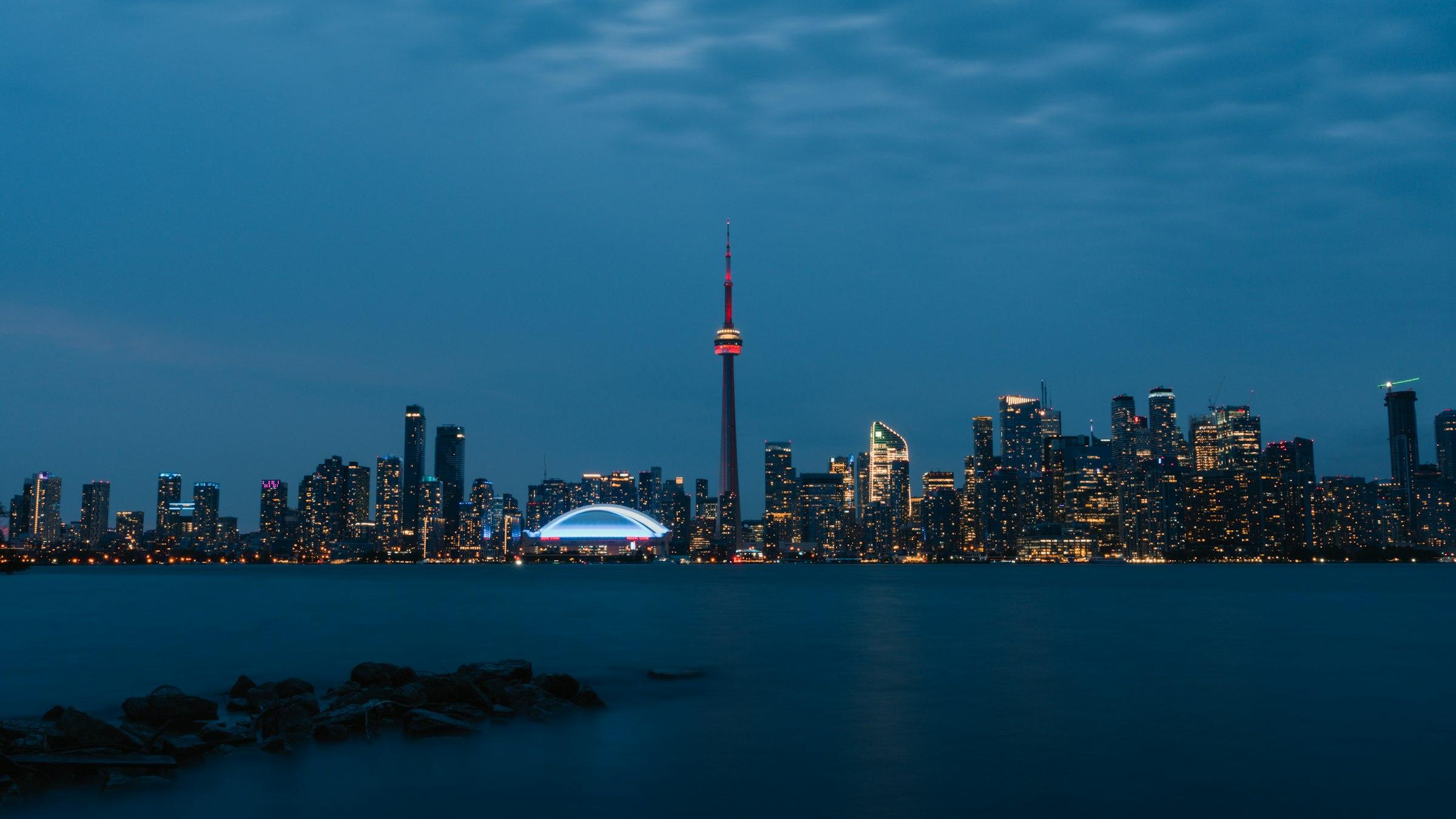
Downtown Toronto is the city centre inside Old Toronto, running from Bathurst Street to the Don Valley and from the lake up to Bloor Street, about 16.6 square kilometres in all. It holds the Financial District, the Entertainment District, the St. Lawrence neighbourhood and the provincial and city governments. Wards 10 and 13, which cover most of the core, grew by 18.0% between 2016 and 2021, far faster than the city as a whole.
Living downtown means most errands can be done on foot. The PATH network links much of the core underground, the Toronto Eaton Centre anchors the Yonge Street retail strip, and St. Lawrence Market runs a Saturday farmers' market in one of the oldest parts of the city. The Entertainment District, west of the Financial District, holds Roy Thomson Hall and the Royal Alexandra and Princess of Wales theatres, and the Harbourfront area includes the Rogers Centre. Four public universities are based downtown: the University of Toronto, Toronto Metropolitan University, OCAD University and Université de l'Ontario français, plus George Brown College. Ferries to the Toronto Islands put beaches and picnic areas within reach of the towers.
Get a custom list of homes in Downtown Toronto that match your budget and must-haves, sent to you as they come up.
Still unsure? Call or text 437-525-2544.
Downtown is generally defined as the part of Old Toronto between Bathurst Street and the Don Valley, from Lake Ontario north to Bloor Street and the CP rail line, about 16.6 square kilometres. TRREB's closest districts are C01 and C08, which also take in some neighbourhoods west of Bathurst Street.
In October 2026, 331 condo apartments sold across C01 and C08 at a combined average of $677,577. The MLS HPI apartment benchmark was $543,300 in C01 and $492,300 in C08.
Very few. Single-detached houses are 0.5% of homes in Wards 10 and 13. Row houses and semis are a little more common, at 3.2% and 0.8% of homes, so most downtown sales are condo apartments.
The population of Wards 10 and 13 rose from 213,905 in 2016 to 252,330 in 2021, an increase of 18.0%, compared with 2.3% for the City of Toronto as a whole.
Photos are stock or Creative Commons images for illustration, not homes listed or sold by Ishwar Garg. Photo credits.
Market figures are averages for the period shown and vary by property type and street. They are not an appraisal of any home. Try the home value calculator for a rough range on a specific property.
Land transfer tax, closing costs and first-time buyer incentives, with official sources.
Buying
Ontario and Toronto land transfer tax rates, first-time buyer refunds, and worked examples at $700K, $1M and $1.3M, with every step of the math shown.
Updated 6 min read
Buying
Every closing cost a GTA buyer pays, from land transfer tax and PST on default insurance to title insurance and adjustments, with official sources.
Updated 6 min read
Buying
FHSA, the RRSP Home Buyers' Plan, land transfer tax refunds, GST/HST rebates and down payment rules for GTA first-time buyers, with official sources.
Updated 9 min read
One free session to check budget, commute and the homes worth seeing.
Or call 437-525-2544