Buying
Land Transfer Tax in Toronto and Ontario, With Examples
Ontario and Toronto land transfer tax rates, first-time buyer refunds, and worked examples at $700K, $1M and $1.3M, with every step of the math shown.
Updated 6 min read
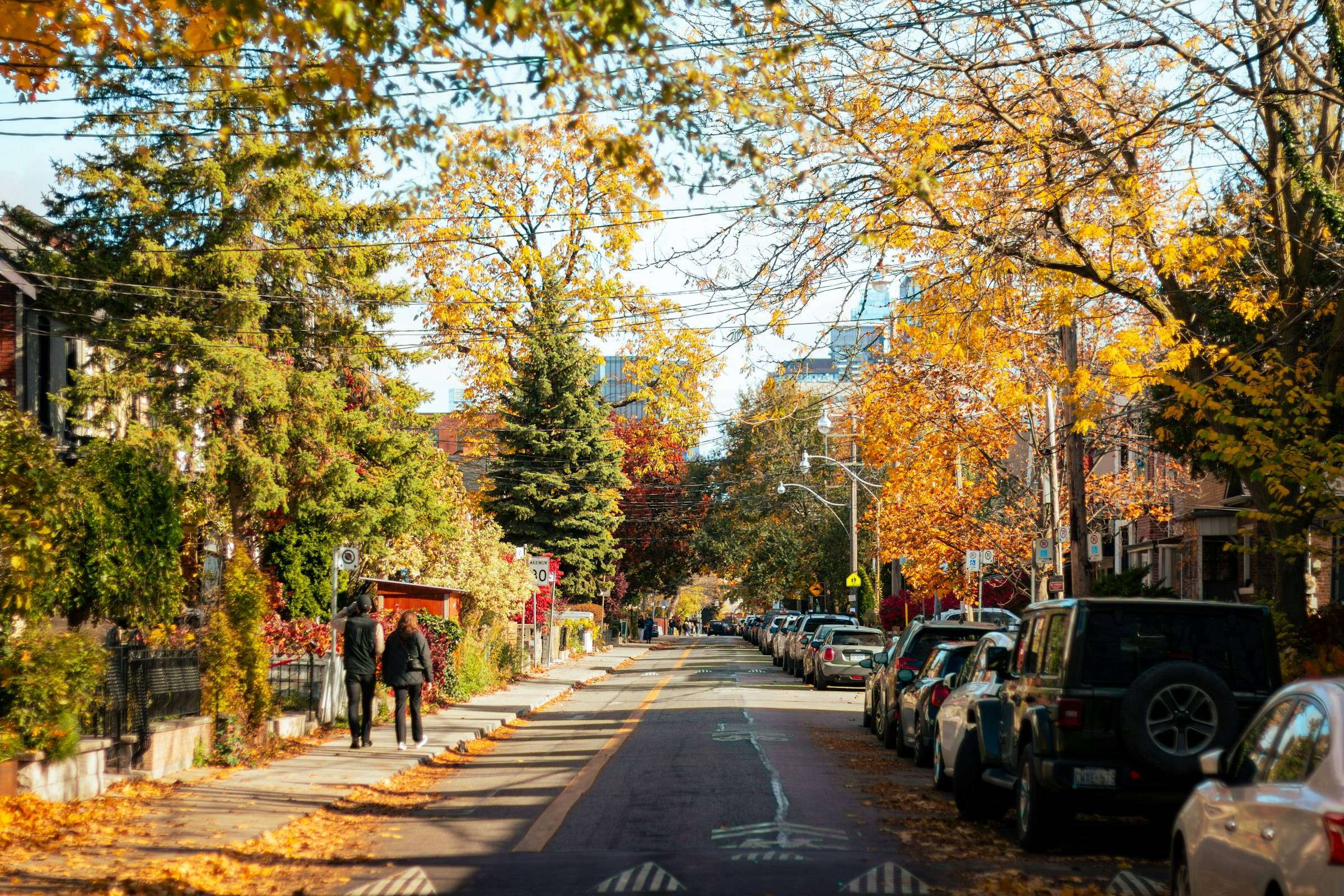
North York covers Toronto's north end, running from the Humber River east to Victoria Park Avenue and from the old city limits up to Steeles Avenue.
TRREB average$1,016,520October 2026, districts 7 districts
Book a free Gameplan SessionSources: City of Toronto. Full citations at the foot of the page. Compiled November 2026.
TRREB sales for October 2026, and the 2021 Census housing mix.
What's your home worth?
Start with your address for a rough range on a North York home.
Using TRREB districts W05, C06, C07, C12, C13, C14 and C15, which together cover most of North York, there were 433 sales in October 2026. Dividing the combined dollar volume by those sales gives an average of $1,016,520. Condo apartments made up 198 of the sales at an average of $580,233, and 138 detached houses averaged $1,785,307. Prices vary more here than in any other district. C12, which includes the Bridle Path and St. Andrew-Windfields, averaged $2,510,169 on 23 sales, while W05 around Black Creek and York University Heights averaged $767,356. Composite benchmarks were lower than a year earlier: down 4.18% in C14, 5.27% in C12, 6.39% in W05 and 6.48% in C15.
North York leans toward high-rise living more than the city as a whole. In the five wards used here, 52.6% of occupied homes are in apartment buildings of five or more storeys, against 46.7% citywide, and 19.5% are single-detached houses. Semis are more common than in most of the suburbs at 8.1%, and row houses add 6.5%. Owners and renters are almost evenly matched, with 51.9% of households owning. The wards differ in who lives there. Ward 7 Humber River-Black Creek has the largest households, averaging about 2.95 people, and the lowest ward median income at $73,000, while Ward 18 Willowdale averages about 2.32 people per household.
Stations, rapid transit and highways.
Boundaries change. Confirm your address with the board before you buy.
Parks, neighbourhoods and who North York suits.
North York covers Toronto's north end, running from the Humber River east to Victoria Park Avenue and from the old city limits up to Steeles Avenue. It became a township in 1922, a city in 1979, and part of the amalgamated City of Toronto in 1998. Yonge Street is its spine, and North York Centre, the downtown planned by the former city, still holds the civic centre, major office buildings and high-density housing.
Shopping in North York is built around two of the city's biggest malls, Yorkdale and Fairview, plus smaller centres such as Bayview Village and the Shops at Don Mills. The Aga Khan Museum, with its collection of Islamic art, sits beside a Line 5 station named for it, and Black Creek Pioneer Village recreates a nineteenth-century village near York University. Downsview Park holds a large sports centre and the Toronto FC training ground. In winter, the North York Ski Centre at Earl Bales Park runs a chairlift inside city limits. Health care is a major employer, with North York General, Hennick Humber and Sunnybrook hospitals all in the district. More than half of residents in the five core wards grew up speaking a language other than English or French.
Get a custom list of homes in North York that match your budget and must-haves, sent to you as they come up.
Still unsure? Call or text 437-525-2544.
Yes. North York was its own city from 1979 until 1998, when it was amalgamated with the other Metro Toronto municipalities into the current City of Toronto. It is now one of the city's administrative districts.
Across TRREB districts W05, C06, C07, C12, C13, C14 and C15 there were 433 sales with a combined average of $1,016,520. Condo apartments averaged $580,233 and detached houses averaged $1,785,307, with large differences between districts.
Line 1 runs north on Yonge Street to Finch and on its west branch through Wilson, Sheppard West, Downsview Park and York University. Line 4 Sheppard runs from Sheppard-Yonge to Don Mills, and Line 6 Finch West meets Line 1 at Finch West station.
In Wards 6, 7, 16, 17 and 18, 52.6% of occupied homes are in buildings of five or more storeys and 19.5% are single-detached houses, based on City of Toronto ward profiles from the 2021 Census.
Photos are stock or Creative Commons images for illustration, not homes listed or sold by Ishwar Garg. Photo credits.
Market figures are averages for the period shown and vary by property type and street. They are not an appraisal of any home. Try the home value calculator for a rough range on a specific property.
Land transfer tax, closing costs and first-time buyer incentives, with official sources.
Buying
Ontario and Toronto land transfer tax rates, first-time buyer refunds, and worked examples at $700K, $1M and $1.3M, with every step of the math shown.
Updated 6 min read
Buying
Every closing cost a GTA buyer pays, from land transfer tax and PST on default insurance to title insurance and adjustments, with official sources.
Updated 6 min read
Buying
FHSA, the RRSP Home Buyers' Plan, land transfer tax refunds, GST/HST rebates and down payment rules for GTA first-time buyers, with official sources.
Updated 9 min read
One free session to check budget, commute and the homes worth seeing.
Or call 437-525-2544